quinta-feira, 13 de junho de 2019

Slant: Fearless, Eccentric Musical Memoir


Slant Magazine em mais uma review que celebra uma artista reavivada e com muito o que dizer


Madonna’s 2005 EDM opus Confessions on a Dance Floor is considered by many to be the 21st-century standard for both every new album the singer releases and contemporary dance-pop at large. Though glorious in its own right, it seemed, at the time, like the work of an artist in damage control. The damage was 2003’s American Life, a personal, politically strident, and humorless album that became Madonna’s first commercial failure in 20 years. It also happens to mark the last time the queen of pop appeared to make music purely on her own terms, without any consideration of the charts or what the public expected of her—a novel idea for an artist in the business of making, well, popular music.
Of course, Madonna has never been your average pop star. Though her music has deep roots in R&B and disco, she is, at heart, a rock auteur, with all of the inclinations toward upending the status quo and expressing a singular vision that designation implies. Her last album, 2015’s Rebel Heart, was designed by committee, while its predecessor, MDNA, was recorded during a period when she seemed more interested in directing movies and extending her brand than making music. So it makes sense that when she decided to forgo songwriting camps and aspirations of a late-career radio hit for her 14th album, Madame X, Madonna turned to French producer Mirwais, her primary collaborator on American Life.
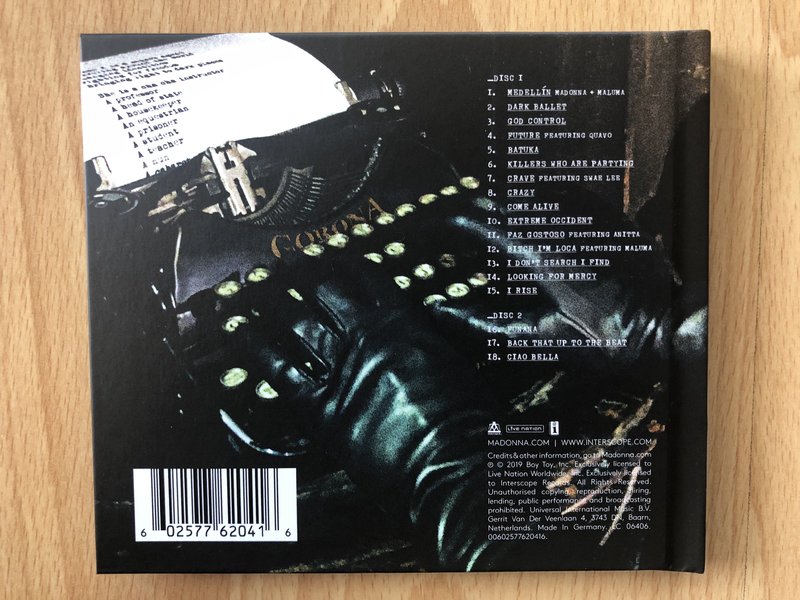
In other words, Madame X sounds like the work of an artist reawakened, and one who’s got something to say. It’s a development reportedly inspired by her time in Lisbon, where she was surrounded by musicians and art in a way she hadn’t been since her pre-fame days in the East Village. The influence of Lisbon’s multicultural history can be heard on tracks like the fado-meets-Motown “Crazy”—co-produced by Mike Dean, the album’s other principal knob-twirler—and the polyrhythmic “Batuka,” featuring Afro-Portuguese group Orquestra de Batukadeiras.

Madame X plays like a musical memoir, sometimes literally: “I came from the Midwest/Then I went to the Far East/I tried to discover my own identity,” Madonna sings on the Eastern-inflected “Extreme Occident,” referencing her rise to fame and spiritual awakening, famously documented on her 1998 album Ray of Light. A multi-part suite that shifts abruptly from electro-pop dirge to classical ballet and back again, “Dark Ballet” is a Kafkaesque treatise on faith and her lifelong crusade against the patriarchal forces of religion, gender, and celebrity—an existential battle echoed in the Jean-Paul Sartre-quoting closing track “I Rise.”
The album’s autobiography is also conveyed sonically: It’s a thrill to hear Madonna singing over a ‘90s house beat on the smoldering “I Don’t Search I Find.” But despite its ballroom strings, finger-snaps, and throaty spoken-word bridge, comparing it to “Vogue” or “Erotica” would be too easy. This isn’t a song so much as a mood. It’s downstairs music, the distant bassline rumbling beneath your feet as you slip into a bathroom stall for a quick bump or fuck.
Madonna has a reputation for being a trendsetter, but her true talent lies in bending those trends to her will, twisting them around until they’re barely recognizable, and creating something entirely new. The album’s pièce de résistance, at least in that regard, is the six-minute “God Control,” which begins with Madonna conjuring the spirit and disaffected monotone of Kurt Cobain—“I think I understand why people get a gun/I think I understand why we all give up,” she sings through clenched teeth—before the whole thing implodes into a euphoric, densely layered samba-disco-gospel mash-up. Throughout the song, Madonna’s vocals alternate between Auto-Tuned belting, urgent whispers, and Tom Tom Club-style rapping as she takes on the gaslight industrial complex and so-called political reformers. On paper, it might sound like the ingredients for a musical Hindenburg, but—somewhere around the midpoint, when she declares, “It’s a con, it’s a hustle, it’s a weird kind of energy!”—it all coheres into the most exhilaratingly batshit thing she’s done in years.

If, metaphorically, Madame X represents Madonna’s rediscovery of her voice as an artist, then it also highlights the literal loss of it. Over the years, the soft edges of her voice have grown sharper, and the album’s pervasive vocal effects—most gratuitous on the electro-ragga “Future” and, to a lesser degree, the haunting “Looking for Mercy”—have a distancing effect. The heavy Auto-Tune on Music and American Life was deployed in service of larger conceptual themes like imperfection (“Nobody’s Perfect”) and anonymity (“Nobody Knows Me”), contrasted by the bare performances of more confessional songs like “Easy Ride.” Here, filters are indiscriminately thrown on nearly every song, which only serves to obscure Madonna’s humanity. On “Medéllin,” for example, her admission that “For once, I didn’t have to hide myself” is pointlessly cloaked in Auto-Tune, keeping us at a remove.
When Madonna isn’t singing with what sounds like a mouthful of gumballs on “Crave,” the rawness of her voice amplifies the nakedness of her lyrics: “Ran so far to try to find the thing I lacked/And there it was inside of me.” Likewise, you can hear the grit and grief in her voice when, on “Crazy,” she sings, “I bent my knees for you like a prayer/My God, look at me now.” The track “Killers Who Are Partying” has been flagged by some critics for its lyrics—ostensibly inspired by scripture, the post-World War II poem “First they came…,” or maybe both—but the naïveté of Madonna’s words would be more cringe-inducing if her delivery wasn’t quite so bewitching. Mirwais’s arrangement, too, casts a spell: Old world meets new world as mournful fado guitar and accordion swirl beneath the track’s stuttering beats and warped synths.
Madame X is fearless, the sound of an artist unapologetically indulging all of her whims and quirks. The garish favela funk of “Faz Gostoso” and the playful reggaeton of “Bitch I’m Loca”—featuring Anitta and Maluma, respectively—feel out of place amid the album’s otherwise refined sonic palette. But even when Madonna falters, at least you know you’re getting the real deal and not some version of a pop icon cooked up in a songwriting lab.

Madame X: Box mais que especial


Já está chegando à mão dos fãs o maravilhoso Box Madame X que contém o álbum standard em K7, o deluxe capa dura, um vinil 7 polegadas de I Rise e um pôster


fotos: wunderkind/madonnanation


quarta-feira, 12 de junho de 2019

Independent: Intriguing, often brilliant


O Independent é mais um jornal que reconhece Madame X como o álbum mais ousado, estranho e interessante em anos...


Madonna’s new album is full of dance tracks. But if any one of them came on in a club, there would be at least 30 seconds during which everyone would stop dancing and stand around in bewilderment.

On “Dark Ballet”, it would happen as the threatening spoken word breakdown kicked in, set to a nightmarish fairground waltz. On “God Control”, it would be prompted by the manically ascending violins – or perhaps the jarring gunshots. And on “I Rise”, it would be the sampled speech from survivors of the Parkland school shooting. With her 14th album, the Queen of Pop isn’t interested in serving up palatable bangers.
Madame X – which comes 36 years after Madonna’s self-titled debut set her on course to becoming the highest-grossing female touring musician in history – is the 60-year-old’s most exciting, hostile, and, well, bonkers, in ages. Her previous album, 2015’s Rebel Heart, was disappointing, more notable for its problematic promotional campaign (she released a series of photos of civil rights activists bound up in black rope to resemble the album artwork, and then compared the album leaking to rape) than for its content. Madame X, by contrast, is endlessly fascinating. It is an intriguing, often brilliant, though occasionally awful record.

Influenced by several years spent living in Portugal, and recorded in Lisbon, London, New York and Los Angeles, Madame X is such a cultural melange – Latin trills, Jamaican dancehall instrumentals, African drums, choral masses and disco beats crop up throughout – that it sometimes verges on collapsing in on itself. At other times, though, what is thrown at the wall sticks beautifully. “Come Alive”, which features London’s Tiffin Children’s Chorus, is vast and cinematic. “I Don’t Search I Find” is a cross between Nina Simone’s “Feeling Good”, a Nineties house track, and an orchestral Bond song (Madonna, of course, recorded the theme for Die Another Day in 2002).

The album is lyrically unbound, too. “People tell me to shut my mouth, that I might get burnt”, she sings on “Dark Ballet” – surely a nod to the shock and horror she has elicited while blazing a trail through pop for the past four decades – “Keep your beautiful lies / Cus I’m not concerned.”

Mostly, though, the record is less a personal riposte than a political one. On “God Control”, clearly an attack on America’s feeble gun control laws, she sings, sounding as though her jaw is firmly clenched: “When they talk reforms it makes me laugh, they pretend to help, it makes me laugh”. On “Batuka”, a rabble-rousing chant buoyed by the Batukadeiras (a Portugal-based choir of Cape Verdean heritage), she decrees, “Get that old man, put him in a jail, where he can’t stop us, where he can’t hurt us”. It’s not hard to imagine who that old man might be.

Madonna has always positioned herself as a voice for the voiceless. Sometimes she goes too far in that quest and ends up co-opting identities. She does so quite literally on the risibly misjudged “Killers Who Are Partying”, on which she declares, that faux-English accent bubbling dangerously to the surface, “I will be gay if the gay are burnt / I’ll be Africa if Africa is shot down… I’ll be Islam if Islam is hated… I’ll be native Indian if the Indian has been taken.” It’s well-intentioned, but being an ally doesn’t quite work like that.  

A recent New York Times profile (which Madonna hated so much she announced, once again, that it had made her feel raped) admired the singer for eschewing the expectations of how older women should behave. “She might have been doing all this for the younger generations,” it noted, “so that when Miley Cyrus was 60, no one would bat an eyelash if she twerked on stage.” It seems just as likely, though, judging by Madame X, that Madonna is doing it for nobody but herself. As she announces on dancehall bop “Future”, “Don’t tell me to stop 'cus you said so.” 

O filho mais bizarro, criativo e politizado de Madonna


Review positiva do jornal Folha de São Paulo!


leia sobre cada faixa:

domingo, 9 de junho de 2019

sexta-feira, 7 de junho de 2019

The Sun review: epic pop


E saiu a empolgada review no the Sun


BOLD experimentation, controversial political comment and downright epic pop.
That’s why Madonna’s highly anticipated new album marks yet another phase of her groundbreaking chart career.
 Madonna’s highly anticipated new album marks yet another phase of her groundbreaking chart career
6
Madonna’s highly anticipated new album marks yet another phase of her groundbreaking chart careerCredit: Steven Klein
For the creator of some of the biggest pop choruses in history to throw caution to the wind and create some of her most daring music ever, at the age of 60, is a welcome reminder of why Madonna has remained at the cutting edge of music for four decades.
It’s further proof that none of her young rivals are coming anywhere close to making pop music this exciting and boundary-pushing.
Here’s my track by track rundown of what you can expect from Madame X, a global trip of an album,  out next Friday.
MEDELLIN: From track one, it’s clear Madonna’s new home on the Iberian peninsula has provided the inspiration for the  Spanish sound that runs through the album. The chemistry with Colombian rapper Maluma is sizzling. Slow down papi, indeed.
 Madonna and Maluma steam up the screen in the seductive Medellín music video
6
Madonna and Maluma steam up the screen in the seductive Medellín music videoCredit: BackGrid
DARK BALLET: One of Madonna’s most experimental and thrilling tracks, this is the album’s mission statement as she sings: “I can dress like a boy, I can dress like a girl. Cos your world’s obsessed with fame, cos your world’s in so much pain, cos your world’s in flames.”
The intro is reminiscent of the title-track of American Life, which makes sense as Madame X is her first major collaboration on a studio album with French producer Mirwais since their divisive 2003 record.
But beyond the intro of the Joan Of Arc-inspired song, things really get creative, as a sparse piano is introduced and the track slowly reveals itself to be an exhilarating multi-genre experience. Imagine Madonna making a 2019 version of Bohemian Rhapsody.
Between edgy beats and random sounds, we’re treated to the kind of heavy breathing, blowing and airy gasps not heard since Erotica, although rather than sounding orgasmic, here we’re entering a desolate, altogether more disturbing territory.
Key lyric: “People tell me to shut your mouth – keep your beautiful lies because I’m not concerned.”
GOD CONTROL: A strong one-two punch of edgy Madonna tracks. Long rumoured, Madonna takes on the issue of gun control in the US with this heady six-minute plus track where powerful lyrics and gun shots run under a swirly electric beat that becomes euphoric. There’s a Vogue-style rap for good measure too.
Key lyric: “People think that I’m insane, insane people think I’m mad.”
 Madonna performed Future at Eurovision
6
Madonna performed Future at EurovisionCredit: Getty Images - Getty
FUTURE: Performed at Eurovision with the rapper Quavo, the reggae-infused track is a message of hope following the bleak God Control. It’s a Sunday afternoon in the park vibe, very of the moment.
BATUKA: This features Portuguese instruments and Madonna recorded it with locals.
The powerful chanting chorus became a family affair with her daughters contributing some vocals. And I’m  told son David Banda is even credited as one of the writers.
The song feels like the beginning of a revolution. Queen Madonna is rallying her troops, ready for battle. It’s empowering and – helpfully – feels like you can actually dance to it.
KILLERS WHO ARE PARTYING: Here Madonna invokes many minority groups – full list: gay, African, poor, children, Islamic, Israeli, Native American – and a woman, in one of the more controversial moments on the album.
Key lyric: “I’ll be a woman if she’s raped and her heart is breaking.”
CRAVE: Already released, this sweet grower of a song sees Madonna layer her vocals to great effect as she sings of the risk of her cravings, presumably romantic or sexual, “getting dangerous”. The closest we get to a Madonna love song on the album.
 The 60-year-old on the set of a video shoot for Crave


CRAZY: My highlight track, this is a soaring, stripped-back pop masterpiece. The chorus is musically joyous but the lyrics are full of the pain of being let down by a lover or family member. It’s the “last time I wake up for you”, she insists. Her Eighties prowess is still in full effect when she wishes to access it.
Key lyric: “If you think I’ve been foolish then I’ll only let you fool me once, so baby shame on you.”
COME ALIVE: Another moment of spectacular pop, smack bang in the middle of the album. The ethereal song has no traditional chorus, but great use of Auto-Tune and a fabulous choir.
EXTREME OCCIDENT: Middle Eastern beats power another experimental moment where Madonna examines her place in the world and decides “life is a circle”. She remains defiant, with the ongoing theme being her unwillingness to bend to the way society tries to mould her: “I don’t want to blend in, why do you want me to?”
This has been an ongoing thread throughout Madonna’s career. When will her detractors get the message?
Key lyric: “I guess I’m lost, I paid a handsome cost.”
 Madonna performs onstage during the 2019 Billboard Music Awards


FAZ GOSTOSO: Most out and out fun moment on the album – a Latin celebration of how to move your body and party. The street party vibe near the end of the track is total euphoria.
BITCH I’M LOCO: Maluma returns for the naughtiest track on the album, where Madonna sexes it up once more.
The highlight is the two of them speaking with each other flirtatiously towards the end. When he asks her, “Where do you want me to put this?” she replies: “Oh you can put it inside.”
Ooh la la!
I DON’T SEARCH I FIND: Harking back to her Ray Of Light and Confessions era, Madonna pushes her vocals over a stomping club beat.
She appears to pay tribute to her own career with various self-referential moments, including the famous clicks from Vogue and an Erotica-esque spoken-word section.
 Throwing caution to the wind and creating some of her most daring music ever at the age of 60 - Madame X is out Friday June 14
6


LOOKING FOR MERCY: My second favourite moment on the album, this is Madonna at her most vulnerable as she appears to open up about her personal  life in more detail, singing, “I’m looking  for love”.
Key lyric: “Somebody teach me to love, somebody help me to rise above.”
I RISE: The perfect sunset to a very vibrant album. Powerful, haunting and lyrically one of the most consistently strong on Madame X.
After spending the album telling everyone not to criticise her, or tell her what to do, it’s smart to end the record by saying: “I rise up above  it all.” So whatever you say has little consequence anyway.
Madonna will still continue to be Madonna.
And judging by Madame X . . . thank God for that.